Angkor Wat
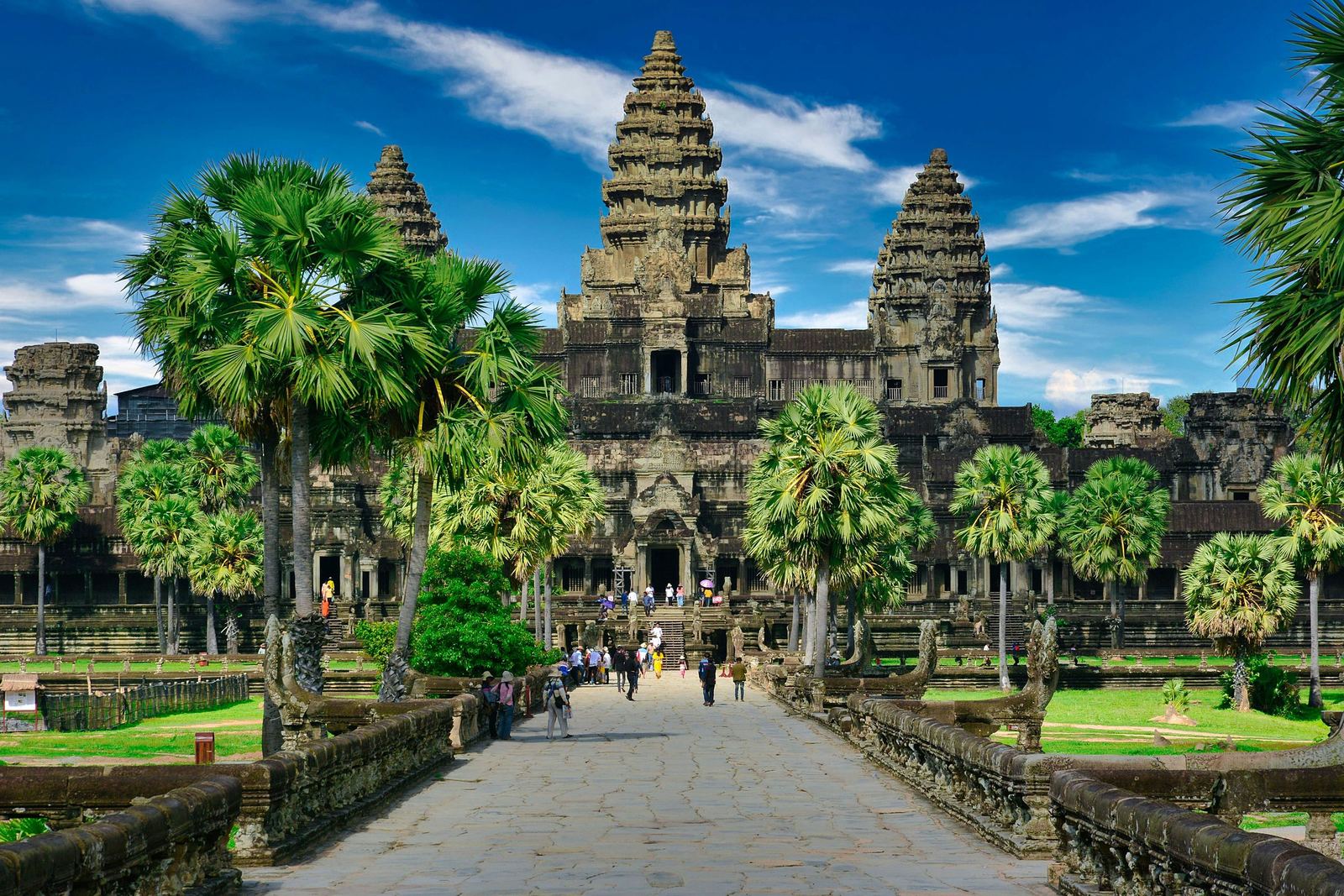
The largest religious monument in the world, built in the 12th century for the god Vishnu. Its five towers stand for the peaks of Mount Meru, the home of the gods, and its galleries hold hundreds of metres of carvings: battles, heavens and hells, and the famous Churning of the Ocean of Milk.
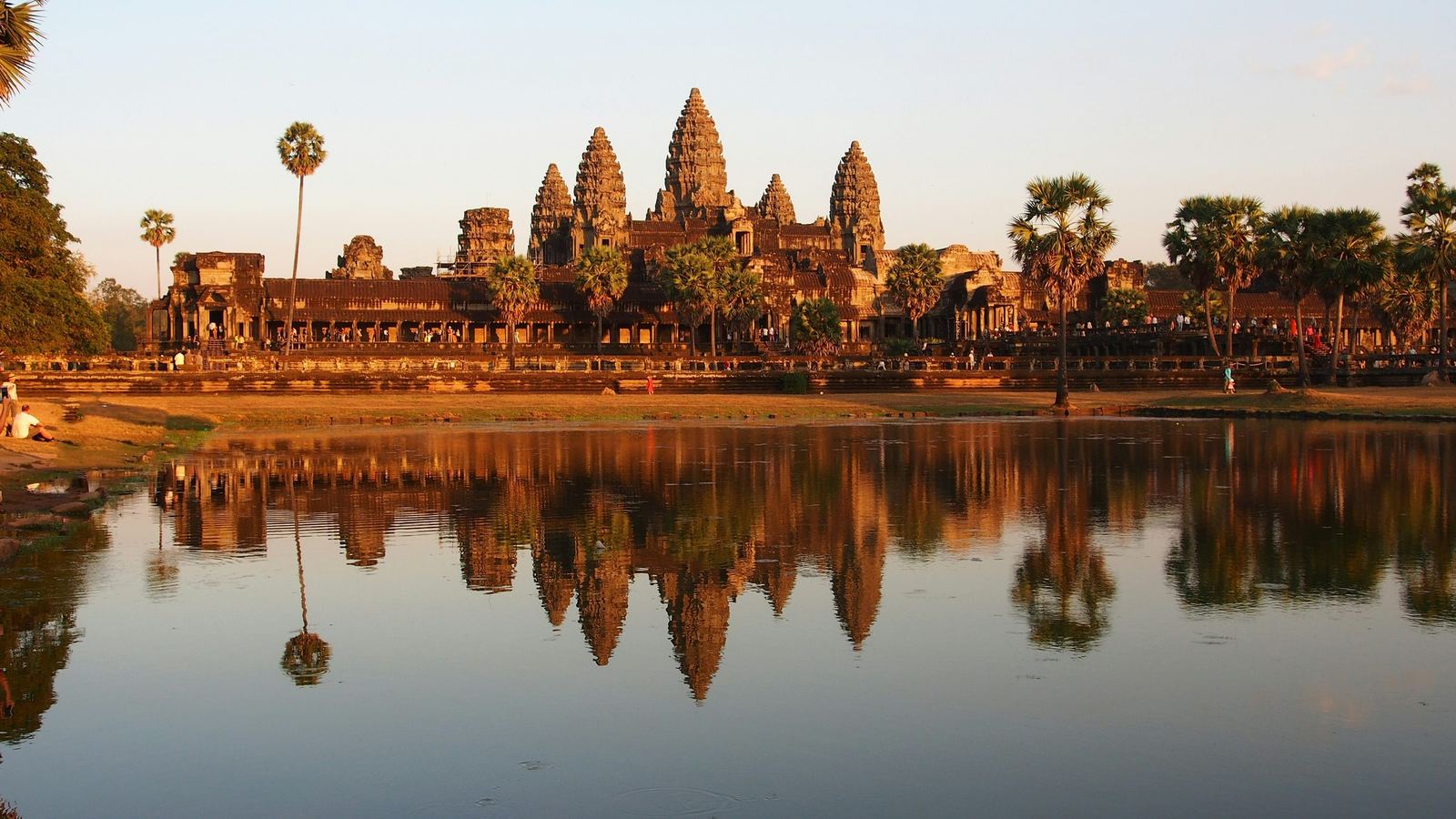
Most visitors come for sunrise, when the towers appear black against a pink sky, reflected in the pond in front. It is busy, but worth doing once. Then walk inside while the others go back for breakfast.
Angkor Thom and the Bayon
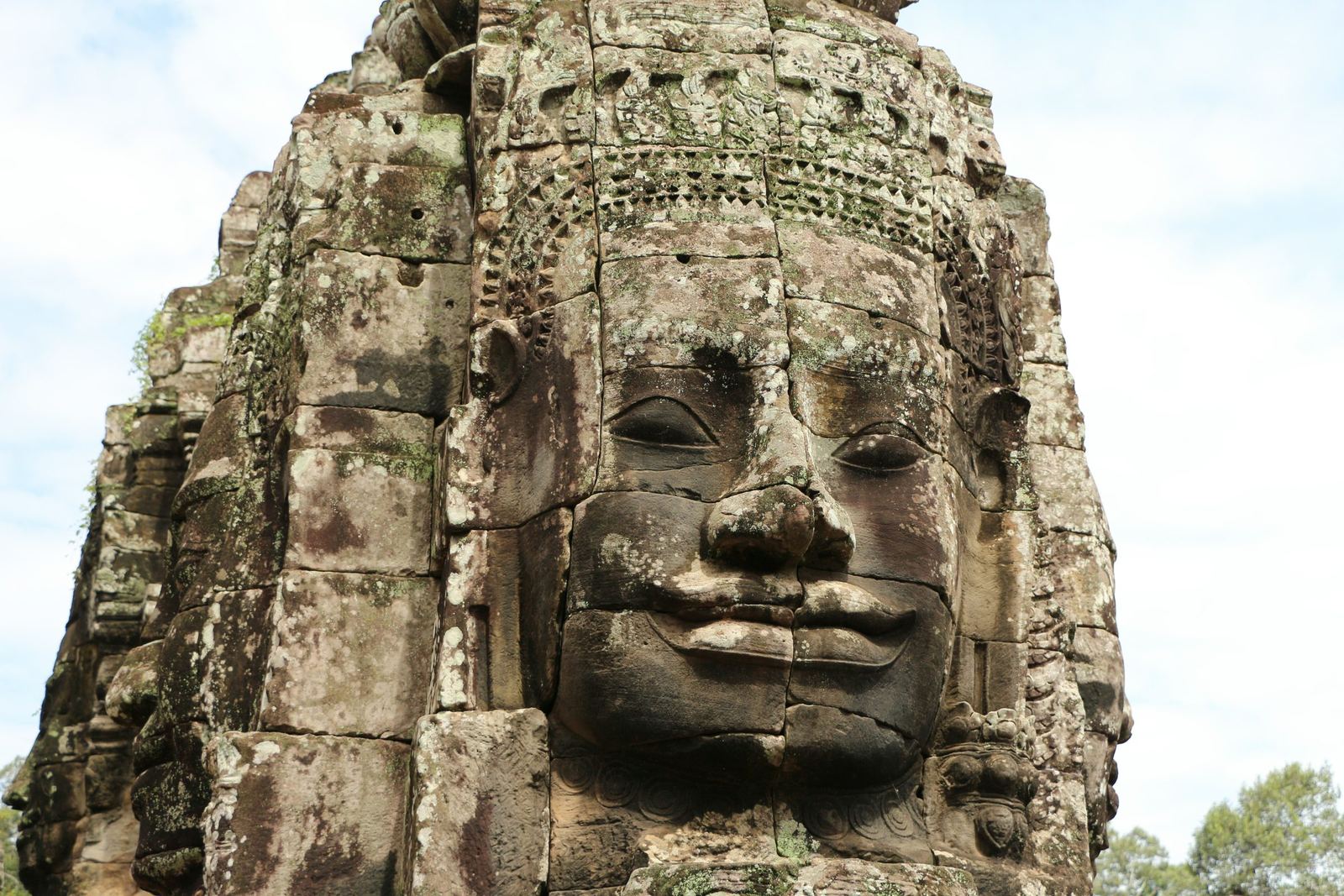
Angkor Thom was the last great capital of the empire, a walled city of 9 km² that you enter through monumental gates. In its centre, the Bayon carries more than 200 stone faces, calm and smiling, looking in every direction. Close by: the Terrace of the Elephants and the Terrace of the Leper King.
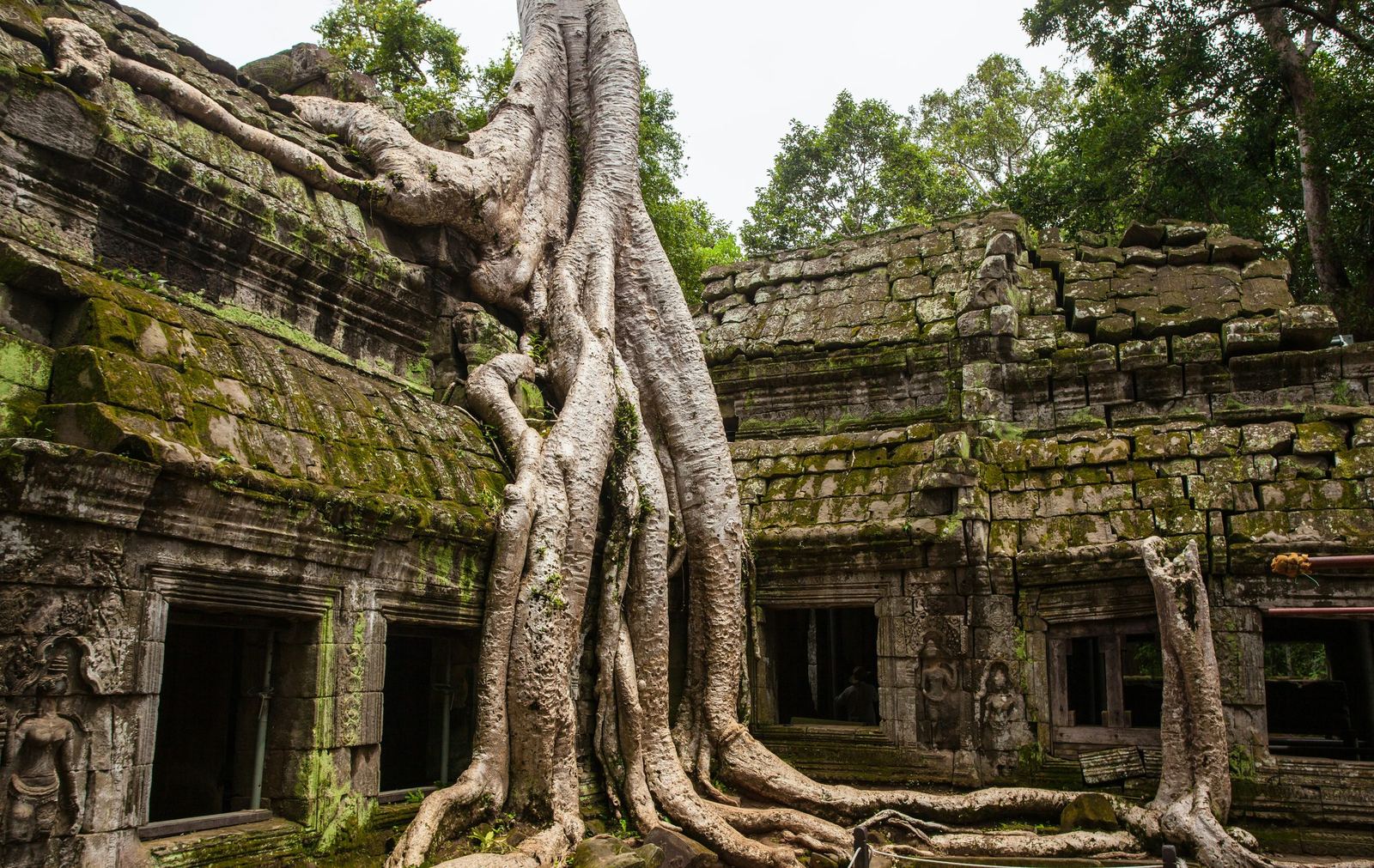
Ta Prohm
A temple left to the forest on purpose, when the first archaeologists arrived. Giant trees grow over the galleries, their roots holding the stones like hands. Go early in the morning or late in the afternoon, when the light comes through the trees.
Further away
Banteay Srei, 37 km north-east, is small but has the finest carvings of Angkor, in pink sandstone. Kbal Spean, a forest walk further on, has gods carved into the bed of a river. Beng Mealea, about 65 km east, is a huge temple collapsed under the jungle. Koh Ker, further north, was briefly the capital in the 10th century. The Roluos group, 13 km from town, has the oldest temples of the region.
One, two or three days
- One day: sunrise at Angkor Wat, the Bayon and Angkor Thom, Ta Prohm, then rest in the afternoon.
- Two days: add the grand circuit (Preah Khan, Neak Pean, Ta Som, Pre Rup at sunset) or Banteay Srei.
- Three days: add Kbal Spean or Beng Mealea, and the Roluos group.
The Angkor Pass
You need a pass to enter the temples: 1 day $37, 3 days $62, 7 days $72. The 3-day pass can be used on any 3 days within 10 days, the 7-day pass within a month. Children under 12 enter free with their passport. Buy it at the official ticket centre of Angkor Enterprise or on their website: your photo is printed on the pass.
Most temples are open from 7:30 am to 5:30 pm. Angkor Wat and Srah Srang open at 5 am for sunrise, Pre Rup and Phnom Bakheng stay open until 7 pm for sunset.
Good to know
- Cover your shoulders and knees: it is a sacred place, and the guards check at the entrance of Angkor Wat's upper level.
- Start early and stop at midday: the hours between 11 and 2 are the hottest. Come back to the pool, go out again at 3.
- Bring water, a hat and good shoes. The steps are steep.
Photos: allphoto bangkok / Unsplash, vicky t / Unsplash, Reena Yadav / Unsplash, Daniel Lienert / Unsplash